No one respects those who don’t respect their own culture and languages. Indians don’t have to make their culture disappear; they have to own it
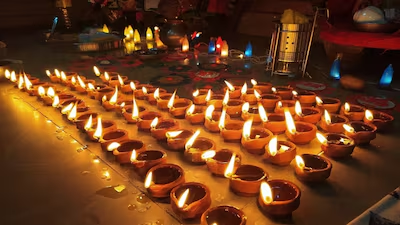
Pic – The Chinese stage magnificent New Year parades in every Western capital but if Indians light diyas or say Jai Shri Ram, it becomes “assertive” and “political.”.
Last week, I asked a question on X that touched a raw nerve. “Chinese have more tech jobs in the US. China is America’s No. 1 enemy. Yet you don’t see hate directed at Chinese in the US, but against Indians. Why?”
Within hours, the post exploded — thousands of replies, hundreds of quote-tweets, more than three hundred thousand views. The responses themselves told the story: anger, guilt, self-reproach, and, running through all of it, a strange willingness to blame Indians for being targets.
Right on cue, Varghese K George of The Hindu by came up with this column— “India’s diaspora diplomacy and the limits of cultural nationalism abroad” — with the answer for us: Indians who display faith and culture overseas are “crossing limits”; the culprit, inevitably, is “Hindutva.” It reads like a polite sermon to stay out of sight in “developed” countries and if Hindus are visible in any way, we must blame “Hindutva.”
Apparently, it isn’t racism when Indians are attacked — it’s our “culture.” We are too loud, too religious, too visible. It’s an old trick — turn the victim into the culprit. When Jews were persecuted, they were called clannish. When the Irish were mocked, they were called superstitious. When Indians face hostility, we are told it is because we have temples and festivals.
Meanwhile, the Chinese stage magnificent New Year parades in every Western capital. Nobody calls that Han chauvinism. Hollywood celebrates it. Yet if Indians light diyas or say Jai Shri Ram, it becomes “assertive” and “political.”
The prejudice comes from both sides of the Western aisle. From the Right, it carries the odor of theology. For two thousand years the “pagan” has been the devil’s child — the idol-worshipper, the heathen, the damned. That vocabulary still seeps through pulpits and politics and shows up in social media posts targeting Hindu temples. From the Left, the prejudice is dressed-up as the good fight against vile Hindutva “fascism”—the proxy for “devil worshipper” in the idiom of the Left. Under the banners of “South Asian Studies” and “caste studies,” a new industry of moral posturing has grown — where the Hindu, with one of the lowest crime rates in the diaspora, is recast as the global face of oppression.
The pattern is repeating itself in America’s universities. Rutgers recently hosted a panel titled “Hindutva in America: A Threat to Equality and Religious Pluralism,” based on a tendentious report that conflates ordinary Hindu organisations with extremism. It took a bipartisan letter from members of the U.S. Congress to remind Rutgers that Hinduism is a faith rooted in pluralism, not a political ideology. Yet the very need for such a reminder shows how normalised anti-Hindu prejudice has become in the language of “academic inquiry.” Ironically, this conference on teaching Hindus pluralism was sponsored by Pakistani institutes.
The tragedy is that the targeting of Hindus was exported from India itself. Marxists who lost influence at home found tenure abroad by exporting domestic politics as Western virtue. “Hindutva” became the safe villain for American liberals who wouldn’t dare criticise Islam or China. When a Harvard-branded Indian professor attacks Hindu civilisation, it lets a white editor feel enlightened, not racist. The targeting of no other minority community in the US would be normalised by the Left as targeting of Hindus is. For Hindus, the racism is natural to the Right and comes pre-laundered by the Left.
China, on the other hand, learned early that power begins with narrative. It projects its civilisation as refined and formidable. Every dragon parade, every Disney film, every Confucius Institute tells the same story — we are ancient and advanced. India, by contrast, exports its gifts and then apologises for them. We gave the world yoga, Ayurveda, meditation — and let others detach them from their source. We handed over the body and surrendered the soul.
The same Westerners who flinch at “Hindutva” begin their mornings with Surya Namaskar. They buy “mindfulness” apps renamed in English and imagine them as Silicon Valley inventions. The civilisation that gave the world chitta-vritti nirodhah is reduced to a breathing technique, while its people are told to keep their gods invisible.
Every immigrant community has walked through its own furnace. The Irish were despised as drunks; the Jews caricatured as schemers; the Japanese interned during war. Yet each turned humiliation into identity. The Chinese themselves were targeted for “stealing jobs” and banned in the 1882 Chinese Exclusion Act in the US.
But each of the communities fought back, not by hiding their culture, but by mainstreaming it. The Irish made St Patrick’s Day a global celebration. The Jews built intellectual and economic power. The Japanese turned discipline into soft power. The Chinese made big parades and even weighed on media giants like Disney to showcase Chinese culture in films. They did not disappear — they dignified themselves.
We, instead, are told that acceptance requires vanishing. Lose the accent, drop the bindi, don’t smell of curry, and for heaven’s sake don’t mention or celebrate Diwali. That isn’t assimilation. It is amnesia.
What makes it worse is our talent for self-sabotage. Every anti-India campaign in the West has Indians at its core — the HINO (Hindu in Name Only) influencer, the NGO activist, the scholar on a Western grant. The British ruled India through brown intermediaries who mimicked the English. Today’s empire of ideas does the same — it simply pays in dollars.
The answer is not retreat or mimicry. It is to present our civilisation as what it truly is — high culture rooted in depth. Yoga is not stretching; it is a science of consciousness. Ayurveda is not folk medicine; it is a philosophy of balance. Sanskrit is not ritual mumbling; it is the grammar of precision. These must be reclaimed and linked to India with authority, not apology. Many Judo or Aikido studios in the US will display the Japanese flag, Japanese paraphernalia or even use Japanese phrases. They did not win by disappearing, but by elevating the image of their culture.
At the same time, immigrants must embody the civic virtues that make societies thrive — cleanliness, punctuality, courtesy, respect for rules. Dharma is not just chanting; it is conduct. Cultural pride loses meaning if it doesn’t translate into civic decency.
Respect is not begged; it is commanded by confidence. The Chinese mastered propaganda, the West mastered branding. India are masters of powerful storytelling — where our epics embodied maryada via living examples. The world won’t understand us until we narrate ourselves. We must take the narrative confidently and seriously and engage, respectfully, wherever we go.
We are not being targeted because of Hindutva. We are being targeted because a confident Hindu unsettles the old order. He reminds a tired civilisation of its own spiritual bankruptcy. And so, he must be mocked, scolded, misunderstood.
The answer is multi-fold. Indians abroad, including fellow IITians, have chased individual success while neglecting to fund and promote community advocacy. I’ve warned of this for years—that success itself will make us a target. At the same time, we must upgrade and work on the reality of India itself—clean up its cities of visible waste and bad infrastructure. The TikTok videos of shining Chinese infrastructure and advances do make an impact. The Chinese are also unapologetic about their language—all their technical work is in Chinese, not English.
No one respects those who don’t respect their own culture and languages. As the responses to my X post showed, the problem begins where we ourselves have learnt contempt for our culture, to the extent that some of us are even willing to amplify internalised cultural stereotypes. The answer is the exact opposite—represent and manifest the civilisation we are rightfully proud of. We don’t have to make our culture disappear; we have to own it.
Originally Published on news18.com