The West’s historical support for Pakistan has only emboldened its aggressive behaviour
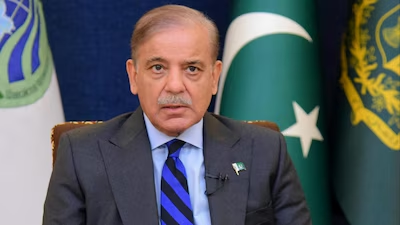
Pic – Reports indicate the United States leveraged this bailout to pressure Pakistan into a ceasefire with India. (Reuters)
In a perverse twist of international diplomacy, the International Monetary Fund (IMF) disbursed $1 billion to Pakistan on May 9, 2025, just weeks after the horrific Pahalgam massacre, where Pakistan-backed terrorists slaughtered 26 tourists in Kashmir. Reports indicate the United States leveraged this bailout to pressure Pakistan into a ceasefire with India, announced on May 10, effectively rewarding a state accused of sponsoring terror. This financial lifeline, unlikely to be repaid given Pakistan’s $130 billion external debt, underscores a troubling pattern: Western support sustains Pakistan’s destabilising actions, undermining global counterterrorism efforts and emboldening a regime that threatens regional and international security.
Pahalgam Massacre: A Brutal Wake-Up Call
On April 22, 2025, the serene Baisaran valley, three miles from Pahalgam in Jammu and Kashmir, became a scene of unimaginable horror. Seven Pakistan-based terrorists, violating a ceasefire, attacked tourists with automatic weapons, killing at least 26 people—mostly Indians—and injuring over three dozen. The assailants targeted non-Muslims, forcing captives to recite Islamic prayers and checking men for circumcision to identify victims. Described as India’s worst terrorist attack in over a decade, the massacre drew comparisons to Hamas’s October 2023 attack on Israel due to its calculated brutality.
India swiftly attributed the attack to Pakistan, citing its history of supporting groups like Lashkar-e-Taiba. The Indian government condemned the massacre and launched investigations, but the international response was lackluster. Some Western nations called for restraint from both sides, a stance critics argue equates India’s defensive measures with Pakistan’s aggression. This muted reaction set the stage for the controversial IMF decision that followed.
IMF Bailout: Rewarding Aggression?
On May 9, 2025, the IMF approved a $1 billion disbursement to Pakistan, part of a $7 billion bailout programme initiated in September 2024. This decision came amid escalating tensions, with Pakistan launching drone and missile attacks on Indian targets following the Pahalgam massacre. India protested vehemently, with Foreign Secretary Vikram Misri arguing the funds could finance state-sponsored terrorism. Despite these concerns, the IMF proceeded, bringing total disbursements to $2.1 billion.
Reports suggest the U.S. played a pivotal role in linking the bailout to a ceasefire, announced on May 10, 2025 (India-Pakistan Ceasefire). Sources indicate U.S. officials pressured Pakistan, making the $1 billion contingent on halting hostilities. Pakistan’s Prime Minister Shehbaz Sharif celebrated the bailout, claiming it thwarted India’s “high-handed tactics”. This sequence—terror attack, financial aid, ceasefire—implies Pakistan was rewarded for its aggression, a move that incentivizes further violence.
Pakistan’s economic fragility, with $130 billion in external debt and $15 billion in foreign reserves covering just three months of imports, makes such bailouts critical. Yet, the lack of stringent conditions raises questions about accountability, especially given Pakistan’s history of misusing aid.
Western Complicity: A Historical Pattern
The West’s financial support for Pakistan is not new. From 1951 to 2011, the U.S. provided $67 billion in aid, much of it military-focused. Post-9/11, $20 billion in defense trade, including F-16 jets, bolstered Pakistan’s capabilities, yet reports indicate 70 per cent of $3.4 billion in military aid from 2002-2007 was misspent. The 2011 discovery of Osama bin Laden in Abbottabad, near a Pakistani military academy, exposed Pakistan’s duplicity. Despite this, aid continued, sustaining a state accused of harboring terrorists.
This pattern persists. In 2024, Pakistan received significant Western support, even as it faced accusations of supporting groups like the Haqqani network, which targets U.S. forces in Afghanistan. The IMF’s 25th bailout to Pakistan, including the recent $1 billion, ignores its poor track record, with India arguing these funds enable terrorism.
Media Bias: Obscuring the Truth
Western media’s coverage of the India-Pakistan conflict often exacerbates the issue. Outlets like the BBC and CNN frequently adopt a neutral stance, framing India’s counterterrorism actions as equivalent to Pakistan’s provocations. Post-Pahalgam, some reports described India’s retaliatory strikes as escalations, downplaying Pakistan’s role (Kashmir Attack). This false equivalence misleads global audiences and shields Pakistan from scrutiny.
Pakistan’s Inter-Services Public Relations (ISPR) effectively shapes narratives, amplifying allegations against India while Western media rarely highlights Pakistan’s human rights abuses, such as those against Baloch or Hindu minorities. This skewed reporting influences policy, as seen in the IMF’s decision to proceed despite India’s protests.
Global Stakes: Pakistan’s Terror Threat
Pakistan’s terrorism is a global concern. Beyond India, groups like the Taliban and Al-Qaeda, supported by Pakistan’s ISI, have destabilized Afghanistan and attacked Western targets. Pakistan’s nuclear arsenal, combined with its political instability, heightens risks. Even allies like China face attacks from Pakistan-based groups, yet Western aid continues, often without oversight.
The Pahalgam massacre and subsequent bailout highlight a dangerous cycle: economic collapse, international sympathy, funding, and renewed aggression. This cycle threatens not just India but global security, demanding a reevaluation of Western policies.
| Issue | Western Action | Proposed Change |
| Financial Aid | $1B IMF bailout, May 2025 | Halt all aid until terror networks dismantled |
| Ceasefire Role | U.S. linked bailout to ceasefire | Prevent aid from rewarding aggression |
| Historical Aid | $67B U.S. aid (1951-2011) | Audit past aid misuse |
| Media Coverage | Neutral, equates India-Pakistan | Report Pakistan’s terror links accurately |
| Global Policy | Ignores Pakistan’s global threat | Support India’s counterterrorism efforts |
Call for Change
It’s time for India to take a firm stand and demand clarity from the United States: “Are you with us or against us in the fight against terrorism?” The U.S. must decide whether it stands with India, a democratic nation battling state-sponsored terrorism, or continues to prop up Pakistan, a country whose own defense minister has admitted to supporting terrorist groups for decades.
In a recent interview, Pakistan’s Defence Minister Khwaja M Asif acknowledged that Pakistan has been doing the “dirty work” for the U.S. and the West by funding and backing terror groups, particularly during the Soviet-Afghan war and post-9/11. He called this a “mistake,” but the damage has been done, and the threat persists.
Given this admission, it is unconscionable for the U.S. to continue providing financial and military aid to Pakistan. The U.S. must commit to a comprehensive strategy to dismantle Pakistan’s terror infrastructure, which includes:
- Cutting off all aid: Immediately halt all financial and military aid to Pakistan until it verifiably dismantles its terror networks and ceases support for groups like Lashkar-e-Taiba and Jaish-e-Mohammed.
- Imposing sanctions: Implement economic sanctions on Pakistan to pressure its government into taking concrete actions against terrorism. These sanctions should target key sectors and individuals involved in supporting terrorism.
- Securing nuclear assets: Given the risks associated with Pakistan’s nuclear arsenal, the U.S. and India should work with international partners to ensure these weapons do not fall into the wrong hands. This could involve diplomatic efforts to bring Pakistan’s nuclear program under international supervision or other measures to guarantee their security.
- Supporting India’s counterterrorism efforts: Provide intelligence, military, and logistical support to India in its fight against terrorism. This includes sharing real-time intelligence on terrorist activities and coordinating joint operations when necessary.
Furthermore, the international community must recognize that Pakistan’s stability is not worth the cost of global security. If Pakistan continues to sponsor terrorism, supporting movements for autonomy or independence in regions like Baluchistan and Sindh could be a strategic option to weaken its central government’s ability to wage proxy wars.
The West’s historical support for Pakistan has only emboldened its aggressive behaviour. By cutting off this lifeline and taking a clear stand against terrorism, the U.S. can send a powerful message that nations must choose between supporting terror or standing with the global community against it.
U.S. House Speaker Mike Johnson has already pledged full support for India’s fight against terrorism, promising energy and resources to aid its efforts. It is time for the U.S. administration to follow through on this commitment and take decisive action.
Conclusion
The IMF’s $1 billion bailout to Pakistan, following the Pahalgam massacre and tied to a ceasefire, exemplifies a flawed Western approach that rewards terrorism with financial aid. This cycle, rooted in decades of unchecked support and biased media narratives, endangers global security. Pakistan’s $130 billion debt ensures these loans are unlikely to be repaid, yet the West persists, ignoring India’s warnings. It’s time for accountability: cut off aid, impose sanctions, secure nuclear assets, and support India’s fight. Only a united stand can dismantle the terror ecosystem Pakistan sustains, fostering a safer world.
Originally Published on news18.com